

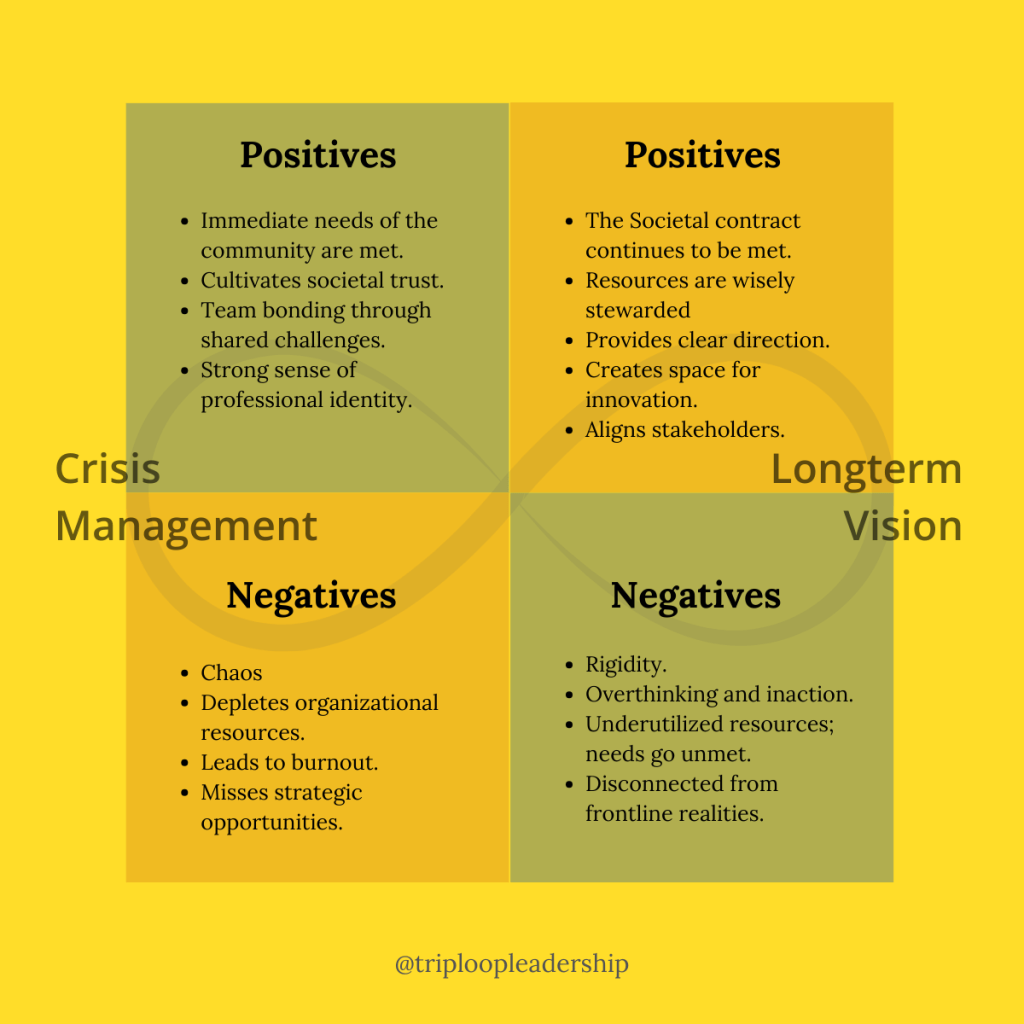
In an environment ruled by constant crisis, it’s easy to let crisis management become our reason for being. Immediate needs demand resources that pull at the threads of long-term planning and keep us constantly focused on the urgent while truly important matters are continually put off.
While a focus on crisis requires agility, when our attention turns towards strategic planning in service of a grand vision, we begin operating with an eye towards stability and steady progress. These are two entirely different ways of managing and leading. Our best attempts to address both can leave us feeling tossed back and forth inside an impossible balancing act.
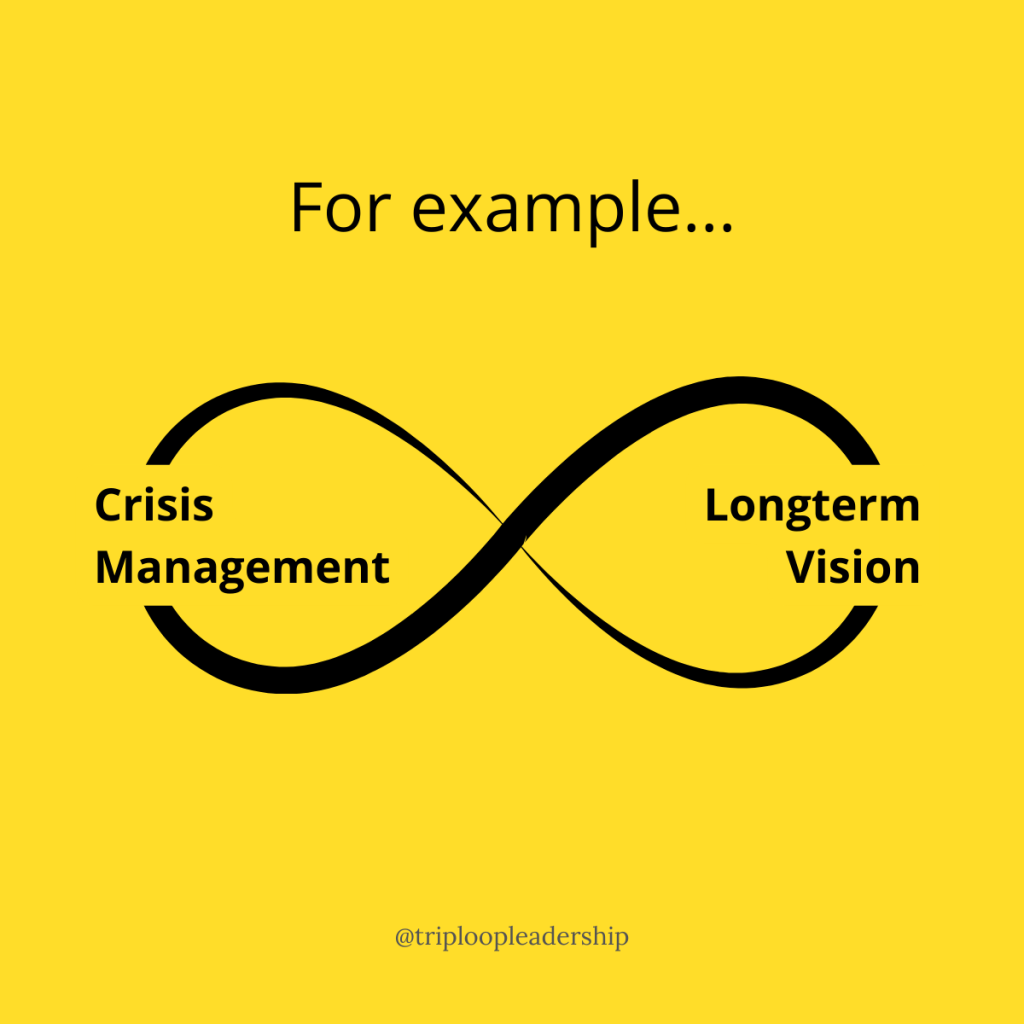
When we find ourselves stuck on a cycle of opposing and often competitive demands, fixing problems that refuse to stay fixed, what we frequently have is not a problem at all but a polarity (Johnson, 1976; Polarity Partnerships).
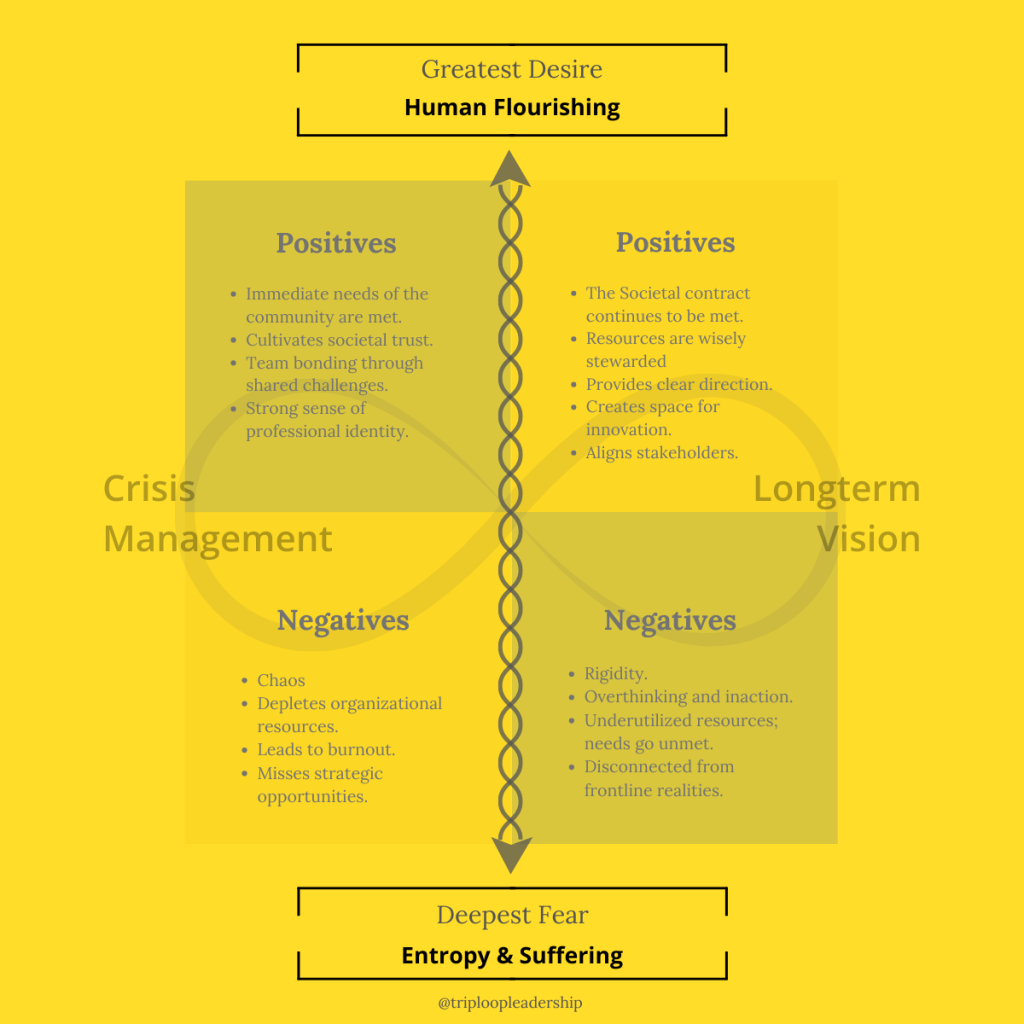
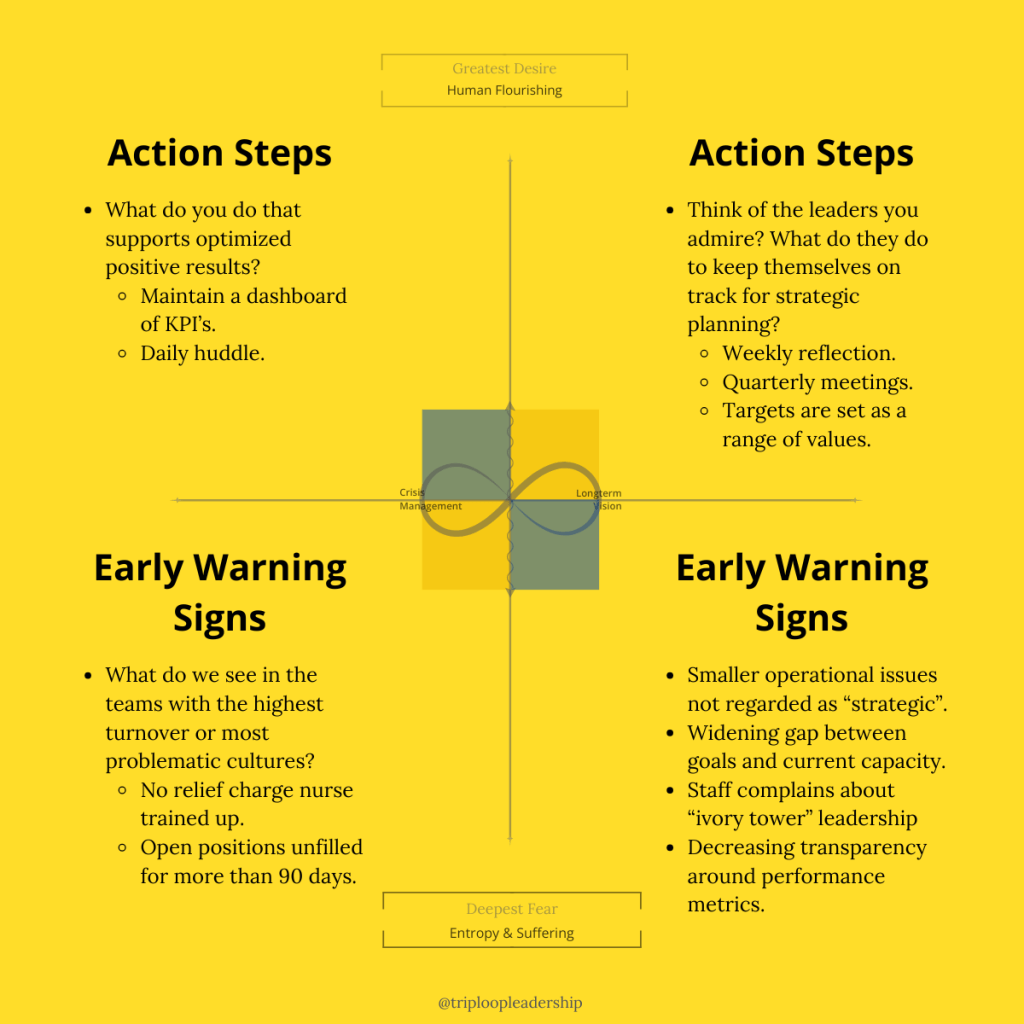
Polarities are interdependent forces, both equally good and right but complete opposites. The “problems” a polarity creates are not meant to be solved or fixed. They’re meant to be managed. There is a natural ebb and flow within a polarity, just like breathing or the seasons. Our job is to understand the positives and the negatives so that we can be intentional to take actions that maximize the one while minmizing the other.
The smart leader acknowledges the dynamic tension that exists within a polarity and seeks to work with it.




 Rebecca's Blog