
Bullies only exist within the Dreaded Drama Triangle (Karpman, 1968), that colluding, dysfunctional dynamic that joins a rescuer, a victim, and a persecutor into a codependent dance. A therapist colleague of mine told me that 90% of relationships in the United States are considered dysfunctional. She referenced the Drama Triangle to describe the types of issues she frequently works with.
When we participate in the drama triangle (and we all do), we tend to settle into one role. Perhaps we play around with a second, then morph into the third later in life. But we can move around all three as the situation allows.
When we play the role of persecutor, we need a victim to punish for our insecurity and a rescuer to blame for the status quo. When we’re in the rescuer role, we look for a victim to make us feel needed and a persecutor to make us feel virtuous. When we’re playing the victim, we look for a rescuer to take responsibility for all our choices and a persecutor to blame for all our problems. Around and round we go.
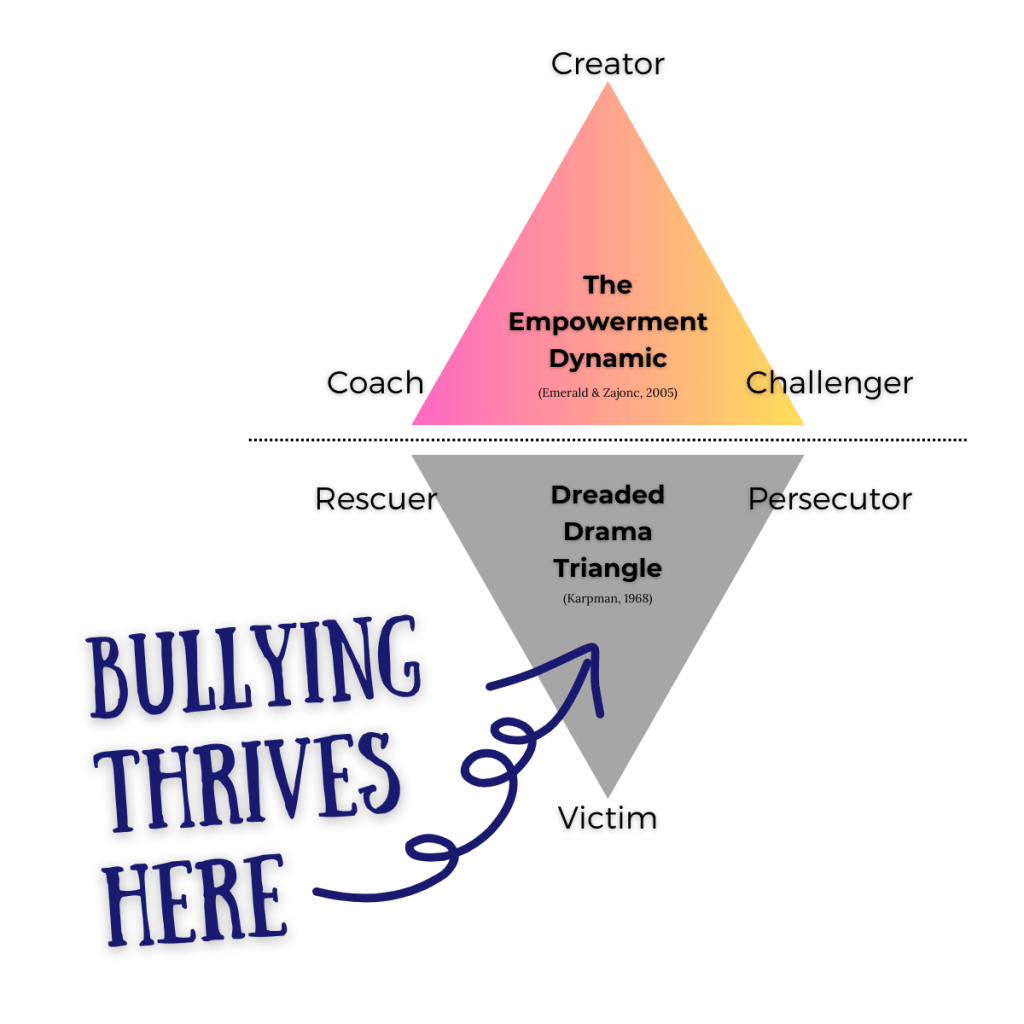
A bully counts on their target being stuck in the drama triangle. That’s the only way the game works. The second we step out of the drama and start playing the game by different rules, the bully has no recourse.
Where else is there to go? What rules do we play by if we’re done with drama? We move over to The Empowerment Dynamic (Emerald & Zajonc, 2005). The empowerment dynamic flips the drama triangle on its head. The rescuer becomes Coach. Persecutor becomes humble Challenger. The Victim becomes a Creator.
What could this look like in real life? How might we respond to a bully when we are firmly rooted in the empowerment dynamic?
The coach engages the bully with flat-affect questions, demonstrating the ability to remain present and regain the upper hand. Don’t allow your rescuer tendencies to lead you into exploitation.
- What are you getting at?
- Why is that important to you?
- Your point?
The challenger holds to their convictions. Don’t be manipulated into playing the bully’s game by fighting fire with fire. Douse the fire with water by declaring your version of reality with quiet confidence.
- That’s not funny.
- I’ve heard enough.
- You’re not getting away with that here.
- There you go again. Putting people down so you can feel good about yourself. I don’t appreciate it.
The creator brings a disarming wit by making statements in the form of a question or playing along with the insult with a twinkle in their eye. Don’t let your habit of going-along-to-get-along force you down a road you don’t actually want to be on.
- Having a bad day?
- Where did I lose you?
- Really?
- Is that the best you can do?
No more melting passivity. No more silent, stewing martyr. No more table-flipping rage. Just centered, unshakable, culture-changing confidence.
For more about dismantling workplace incivility and reclaiming your dignity, check out the bestsellers on Amazon. Maybe start with this one. Reputable learning resources are everywhere. But the ability to shift to empowerment? That’s yours already.
 Rebecca's Blog